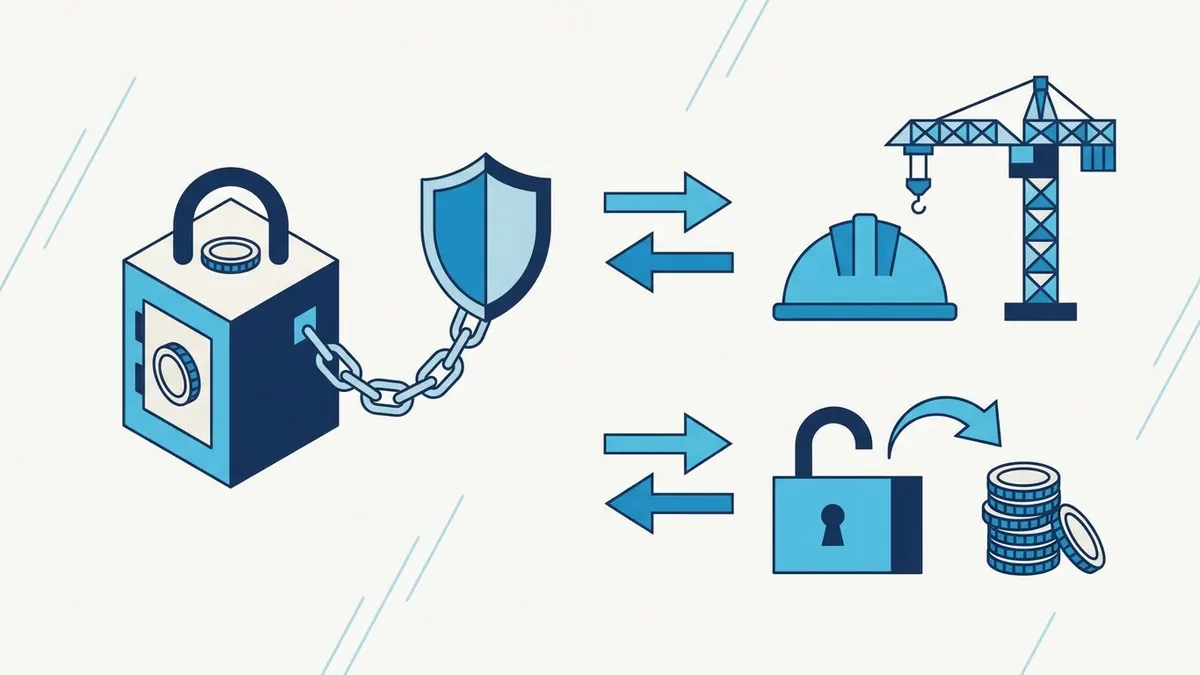
Collateral by the numbers
- $25,000
- California contractor license bond, required since Jan 1, 2023
- CA Business & Professions Code, 2023
When a surety asks for collateral
Collateral is not the norm. The large majority of license and small commercial bonds are written with no collateral at all. It comes up only when a file carries more risk than the premium alone can offset. The common triggers are:
- Large court or appeal bonds. A big appeal bond can equal the full judgment, so a surety often secures it.
- Tough-credit contract bonds. When credit or financials fall short of the bond size, collateral can bridge the gap.
- Limited track record. A new or unproven operator on a sizable bond may be asked to secure part of it.
What counts as collateral
Collateral is something of value the surety can hold and, if it ever pays a valid claim, draw on to cover the loss. It stays your asset unless a legitimate claim is paid. The usual forms are:
- Cash. The simplest option, held by the surety in a dedicated account.
- Irrevocable letter of credit (ILOC). A commitment from your bank that the surety can draw on. It keeps your cash working elsewhere while still securing the bond.
How it is held and released
The surety holds your collateral against a potential loss, not as a payment or a fee. Nothing is spent unless the surety actually pays a valid claim. As long as you meet your obligation, the money simply sits secured.
When the risk clears, the surety releases it. That means the bonded obligation has ended and no valid claim is outstanding: the court matter concludes, or the bonded job is finished and the claim window has closed. At that point the cash comes back, or the letter of credit is released by your bank.
How to reduce or avoid it
Collateral is often negotiable, and it is rarely permanent. The levers that reduce or remove it are the same ones that make you a stronger risk overall:
- Improve your credit.Better credit lowers the surety's perceived risk and can replace the need to secure the bond.
- Use funds control. On contract jobs, funds control lets a neutral party disburse project money, which can satisfy a surety in place of collateral.
- Build a track record. Completed bonded jobs prove reliability and make future bonds easier to write without security.
Collateral is also asked for after the fact. Once a claim is opened against your bond and the surety sets a reserve, most indemnity agreements let it demand a deposit covering that reserve before a dollar has been paid out. That is a very different conversation from collateral at underwriting, and it is worth understanding before it arrives.
If a surety is asking for collateral you would rather not post, that is a good reason to work a file through a broker. See how we handle tricky risks on our hard-to-place surety bonds page. We do not promise a collateral-free bond, since underwriting still applies, but we know how to structure the file to minimize it.