Surety bonds by the numbers
- $150,000
- Federal contract size that requires performance and payment bonds
- Acquisition.gov (FAR 28.102)
- $25,000
- California contractor license bond, required since Jan 1, 2023
- CA Business & Professions Code, 2023
One structure, four jobs
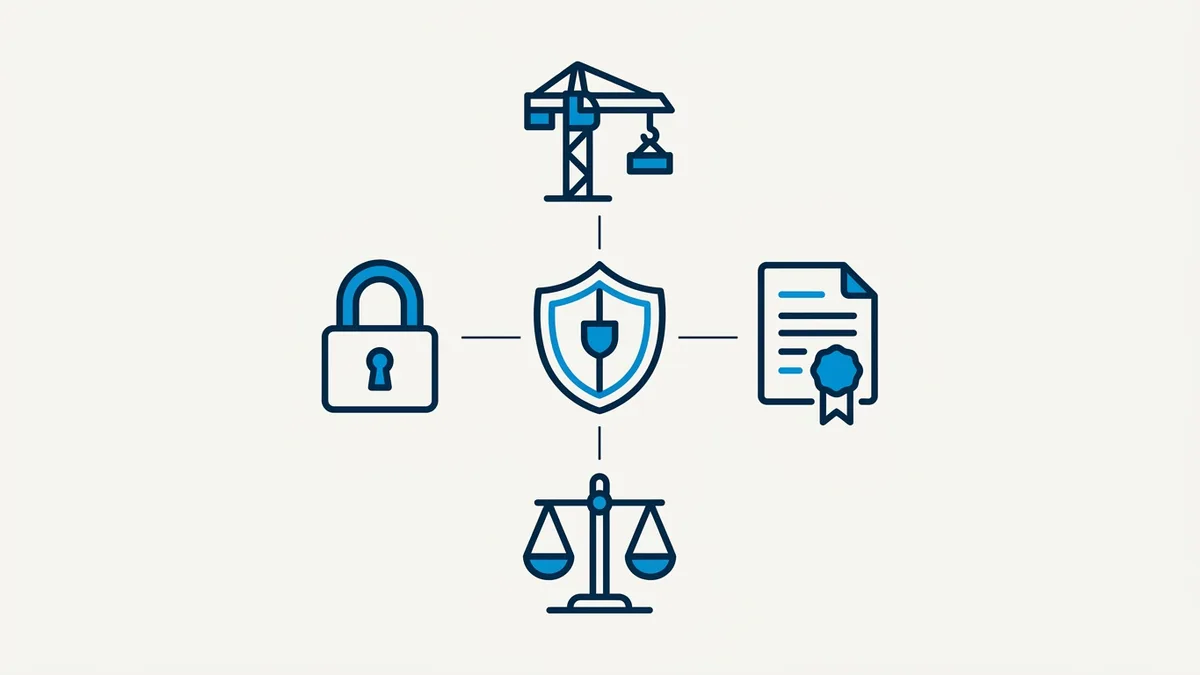
Every surety bond is the same three-party promise: you (the principal) will meet an obligation to a obligee, and a surety guarantees it. What separates the types is the obligation itself. Sort by that, and the whole surety world falls into four families.
| Family | Guarantees | Who requires it |
|---|---|---|
| Contract | A construction project is bid, built, and paid | Project owners and public agencies |
| License & permit | A business follows the laws of its trade | State and local licensing agencies |
| Court & probate | A duty in litigation or an estate is met | Courts |
| Fidelity | Against employee theft or dishonesty | Employers (and some clients) |
1. Contract (construction) bonds
Contract bonds guarantee a construction project. They travel in a set: a bid bond backs your proposal, a performance bond guarantees you finish the work, and a payment bond guarantees your subcontractors and suppliers get paid. Public works almost always require them. See the contract bonds hub for how they fit together, or the side-by-side breakdowns of payment vs. performance bonds and bid vs. performance bonds. On union work, a contractor may also post a wage and welfare bond guaranteeing the fringe-benefit contributions owed to the trust funds.
2. License and permit bonds
These let a business get and keep a license by guaranteeing it will follow the rules of its trade. The California contractor license bond is the headline example, but the family is huge: notary, auto dealer, freight broker, cannabis, and dozens of other commercial and permit bonds. They are the most common bonds because so many trades require one to operate.
The family reaches well beyond the trades. Whole professions post their own license bond, from a tax preparer bond and immigration consultant bond to a talent agency bond, debt collector bond, and farm labor contractor bond. Consumer-facing and financial businesses have theirs too: the money transmitter bond, seller of travel bond, and lease guarantee bond, plus the health studio bond, ticket seller bond, and telephonic seller bond that protect the customers who pay them in advance.
3. Court and probate bonds
Court bonds back a duty inside the legal system. Judicial bonds like an appeal bond come up in litigation, while probate and fiduciary bonds like a probate bond, guardianship bond, or conservatorship bond guarantee that an executor, administrator, guardian, or conservator handles an estate or a person's affairs honestly. Both are priced on a sliding scale; see probate bond cost and appeal bond cost for the numbers.
4. Fidelity bonds
Fidelity bonds protect a business from its own people: theft, embezzlement, or fraud by an employee. A fidelity (employee dishonesty) bond covers general staff, and an ERISA bond is the federally required version protecting a retirement plan. Its client-facing mirror, the business service (janitorial) bond, protects your customers instead, covering them if one of your employees steals on their property. Strictly, fidelity bonds are insurance-like coverage, but they are placed through the same surety markets.
Which one do you need?
Whichever family you land in, the document itself is shorter than people expect. See what a surety bond actually looks like.
You rarely choose. The obligee, the agency, court, or owner requiring the bond, names it in a statute or on a bond form. Your job is to read that requirement; ours is to place the exact bond fast and at the best rate. Once you know the family, how the amount gets set is the next question. Not sure which family you are in? The glossary defines the terms, and a quote gets you the specific bond identified and priced.